Buy gossips.eu ?
We are moving the project
gossips.eu .
Are you interested in purchasing the domain
gossips.eu ?
domain@kv-gmbh.de · 0541-91531010
Buy gossips.eu ?
What is the limit of n0?
The limit of n0 as n approaches infinity is 0. This is because as n becomes very large, the value of n0 becomes increasingly smaller and approaches 0. Therefore, the limit of n0 as n goes to infinity is 0. **
Can someone explain the difference between the set Q and the set N0 to me?
Certainly! The set Q represents the set of rational numbers, which are numbers that can be expressed as a ratio of two integers (e.g., 1/2, -3/4, 5/1). On the other hand, the set N0 represents the set of non-negative integers, which includes all positive integers (1, 2, 3, ...) as well as zero (0). In summary, Q includes all fractions and decimals that can be expressed as a ratio of integers, while N0 includes only whole numbers starting from zero. **


Similar search terms for N0
Top-Angebote
Products related to N0:
-
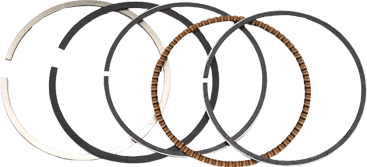
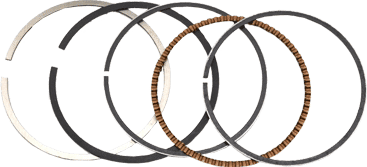
MAHLE 592 44 N0 Piston Ring KitCylinder Bore [mm]: 102,0; Component Number: 1. T 3.5 Mo, 2. M 2.5 Cr, 3. DSF 4.0 Cr; Net Weight [g]: 112; Packaging length [cm]: 19,0; Packaging width [cm]: 19,00; Packaging height [cm]: 3,00; TecDoc Engine Number: 14511, 1451035,49 £*Shipping: 8,45 £Secure redirect to the provider
-
MAHLE 015 61 N0 Piston Ring KitCylinder Bore [mm]: 87,5; Component Number: 1. R 1.2 Cr P, 2. NM 1.2 P, 3. 3S 2.5 Cr; Packaging length [cm]: 12,5; Packaging width [cm]: 12,50; Net Weight [g]: 25; Packaging height [cm]: 3,00; TecDoc Engine Number: 18206, 18207, 18208, 19205, 20039; Engine Code: AOWB, LF1716,49 £*Shipping: 8,45 £Secure redirect to the provider
-
MAHLE 009 99 N0 Piston Ring KitCylinder Bore [mm]: 135,0; Component Number: 1. T 4.0 CrK, 2. NM3.0 IWU Cr, 3. DSF 5.0 Cr; Net Weight [g]: 147; Packaging length [cm]: 19,0; Packaging width [cm]: 19,00; Packaging height [cm]: 3,00; TecDoc Engine Number: 16507, 20620, 16506, 16505; Engine Code: F3BE0681B, F3BE0681C, F3BE0681V42,49 £*Shipping: 8,45 £Secure redirect to the provider
-
MAHLE 028 16 N0 Piston Ring KitCylinder Bore [mm]: 83,0; Component Number: 1. R 2.0 CrK, 2. M2.0 IFU Mo, 3. DSF 3.0 Cr; Packaging length [cm]: 12,5; Packaging width [cm]: 12,50; Packaging height [cm]: 3,00; Net Weight [g]: 32; TecDoc Engine Number: 17337, 18030, 18031, 19881, 2118226,49 £*Shipping: 8,45 £Secure redirect to the provider


-
Can someone explain the difference between the set of rational numbers Q and the set of natural numbers N0 to me?
The set of natural numbers, denoted by N0, includes all positive integers starting from 1 (1, 2, 3, 4, ...). On the other hand, the set of rational numbers, denoted by Q, includes all numbers that can be expressed as a ratio of two integers, where the denominator is not zero. This means that Q includes not only positive integers but also fractions, decimals, and negative numbers that can be expressed as a ratio of two integers. In essence, while N0 is a subset of Q, Q is a much larger set that encompasses a wider range of numbers. **
-
What is the word problem for exponential growth, where the number of bacteria per hour increases by 28, starting from a quantity n0 at time t0?
The word problem for exponential growth in this scenario would be: "If the number of bacteria per hour increases by 28, starting from an initial quantity of n0 at time t0, how many bacteria will there be after a certain amount of time has passed?" This problem involves exponential growth because the number of bacteria is increasing by a fixed percentage (28) each hour. The initial quantity n0 and time t0 are used as starting points to calculate the future quantity of bacteria based on the exponential growth rate. **
-
What is the word problem for exponential growth, where the number of bacteria per hour increases by 28, starting from a number n0 at time t0?
The word problem for exponential growth in this scenario would be: "If a colony of bacteria starts with n0 bacteria at time t0, and the number of bacteria per hour increases by 28, how many bacteria will there be after a certain number of hours?" This problem can be solved using the formula for exponential growth, which is N(t) = n0 * e^(kt), where N(t) is the number of bacteria at time t, n0 is the initial number of bacteria, e is the base of the natural logarithm, k is the growth rate, and t is the time in hours. **
-
What is the word problem for exponential growth, where the number of bacteria increases by 28 per hour, starting from a quantity n0 at time t0?
The word problem for exponential growth in this scenario would be: "If a colony of bacteria starts with a quantity of n0 at time t0 and the number of bacteria increases by 28 per hour, how many bacteria will there be at a given time t?" This problem involves exponential growth because the number of bacteria is increasing by a fixed amount (28) at regular intervals (per hour), leading to a continuous growth pattern over time. The exponential growth formula can be used to calculate the number of bacteria at any given time t based on the initial quantity n0 and the growth rate of 28 per hour. **
What is the word problem for exponential growth where the number of bacteria increases by 28 per hour, starting from a quantity n0 at time t0?
The word problem for exponential growth in this scenario would be: "If a colony of bacteria starts with a quantity of n0 at time t0, and the number of bacteria increases by 28 per hour, what will be the quantity of bacteria at a future time t?" This problem involves exponential growth because the number of bacteria is increasing by a fixed amount (28) at regular intervals (per hour), leading to a continuous growth pattern. The exponential growth formula can be used to calculate the quantity of bacteria at any given time t based on the initial quantity n0 and the growth rate of 28 per hour. **
What is the word problem for exponential growth, where the number of bacteria increases by 28 per hour, starting from an initial amount n0 at time t0?
The word problem for exponential growth in this scenario would be: "If a colony of bacteria starts with an initial amount of n0 at time t0 and the number of bacteria increases by 28 per hour, how many bacteria will there be at a given time t?" This problem involves exponential growth because the number of bacteria is increasing by a constant rate of 28 per hour. The exponential growth formula, \(N(t) = n_0 \times e^{kt}\), can be used to calculate the number of bacteria at any given time t. **
Top-Angebote
Products related to N0:
-
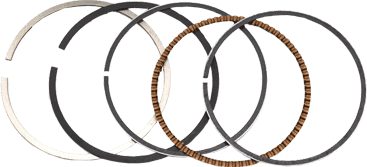
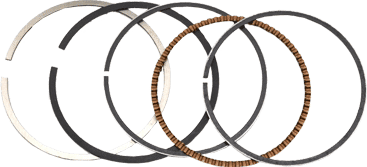
MAHLE 029 90 N0 Piston Ring KitCylinder Bore [mm]: 81,01; Component Number: 1. R1.75 IW Cr, 2. NM 2.0, 3. DSF 3.0 Cr; Packaging length [cm]: 12,5; Packaging width [cm]: 12,50; Packaging height [cm]: 3,00; Net Weight [g]: 32; Engine Code: AAF, ACU, AEU; TecDoc Engine Number: 4015, 934417,49 £*Shipping: 8,45 £Secure redirect to the provider
-
MAHLE 011 06 N0 Piston Ring KitCylinder Bore [mm]: 77,6; Component Number: 1. R 1.5 Cr, 2. NM 1.5, 3. 3S 3.0 Cr; Packaging length [cm]: 12,5; Packaging width [cm]: 12,50; Packaging height [cm]: 3,00; Net Weight [g]: 33; TecDoc Engine Number: 2733, 17589, 19897, 26868, 32909, 4783; Engine Code: X 14 YEH, X14XE11,49 £*Shipping: 8,45 £Secure redirect to the provider
-
MAHLE 592 44 N0 Piston Ring KitCylinder Bore [mm]: 102,0; Component Number: 1. T 3.5 Mo, 2. M 2.5 Cr, 3. DSF 4.0 Cr; Net Weight [g]: 112; Packaging length [cm]: 19,0; Packaging width [cm]: 19,00; Packaging height [cm]: 3,00; TecDoc Engine Number: 14511, 1451035,49 £*Shipping: 8,45 £Secure redirect to the provider
-
MAHLE 015 61 N0 Piston Ring KitCylinder Bore [mm]: 87,5; Component Number: 1. R 1.2 Cr P, 2. NM 1.2 P, 3. 3S 2.5 Cr; Packaging length [cm]: 12,5; Packaging width [cm]: 12,50; Net Weight [g]: 25; Packaging height [cm]: 3,00; TecDoc Engine Number: 18206, 18207, 18208, 19205, 20039; Engine Code: AOWB, LF1716,49 £*Shipping: 8,45 £Secure redirect to the provider
-
What is the limit of n0?
The limit of n0 as n approaches infinity is 0. This is because as n becomes very large, the value of n0 becomes increasingly smaller and approaches 0. Therefore, the limit of n0 as n goes to infinity is 0. **
-
Can someone explain the difference between the set Q and the set N0 to me?
Certainly! The set Q represents the set of rational numbers, which are numbers that can be expressed as a ratio of two integers (e.g., 1/2, -3/4, 5/1). On the other hand, the set N0 represents the set of non-negative integers, which includes all positive integers (1, 2, 3, ...) as well as zero (0). In summary, Q includes all fractions and decimals that can be expressed as a ratio of integers, while N0 includes only whole numbers starting from zero. **
-
Can someone explain the difference between the set of rational numbers Q and the set of natural numbers N0 to me?
The set of natural numbers, denoted by N0, includes all positive integers starting from 1 (1, 2, 3, 4, ...). On the other hand, the set of rational numbers, denoted by Q, includes all numbers that can be expressed as a ratio of two integers, where the denominator is not zero. This means that Q includes not only positive integers but also fractions, decimals, and negative numbers that can be expressed as a ratio of two integers. In essence, while N0 is a subset of Q, Q is a much larger set that encompasses a wider range of numbers. **
-
What is the word problem for exponential growth, where the number of bacteria per hour increases by 28, starting from a quantity n0 at time t0?
The word problem for exponential growth in this scenario would be: "If the number of bacteria per hour increases by 28, starting from an initial quantity of n0 at time t0, how many bacteria will there be after a certain amount of time has passed?" This problem involves exponential growth because the number of bacteria is increasing by a fixed percentage (28) each hour. The initial quantity n0 and time t0 are used as starting points to calculate the future quantity of bacteria based on the exponential growth rate. **
Similar search terms for N0
-
MAHLE 009 99 N0 Piston Ring KitCylinder Bore [mm]: 135,0; Component Number: 1. T 4.0 CrK, 2. NM3.0 IWU Cr, 3. DSF 5.0 Cr; Net Weight [g]: 147; Packaging length [cm]: 19,0; Packaging width [cm]: 19,00; Packaging height [cm]: 3,00; TecDoc Engine Number: 16507, 20620, 16506, 16505; Engine Code: F3BE0681B, F3BE0681C, F3BE0681V42,49 £*Shipping: 8,45 £Secure redirect to the provider
-
MAHLE 028 16 N0 Piston Ring KitCylinder Bore [mm]: 83,0; Component Number: 1. R 2.0 CrK, 2. M2.0 IFU Mo, 3. DSF 3.0 Cr; Packaging length [cm]: 12,5; Packaging width [cm]: 12,50; Packaging height [cm]: 3,00; Net Weight [g]: 32; TecDoc Engine Number: 17337, 18030, 18031, 19881, 2118226,49 £*Shipping: 8,45 £Secure redirect to the provider
-
MAHLE 028 25 N0 Piston Ring KitCylinder Bore [mm]: 89,0; Component Number: 1. R 1.2, 2. NM 1.50 P, 3. 3S 2.0 Cr; Packaging length [cm]: 12,5; Packaging width [cm]: 12,50; Net Weight [g]: 22; Packaging height [cm]: 3,00; TecDoc Engine Number: 19259, 18998, 2238816,99 £*Shipping: 8,45 £Secure redirect to the provider
-
MAHLE 003 76 N0 Piston Ring KitCylinder Bore [mm]: 128,0; Component Number: 1. T 3.0 Mo, 2. M3.0 IWU Cr, 3. DSF 4.0 Cr; Net Weight [g]: 120; Packaging length [cm]: 19,0; Packaging width [cm]: 19,00; Packaging height [cm]: 3,00; TecDoc Engine Number: 5799, 6139, 5827, 22805, 22806, 23242; Engine Code: OM 421.908, OM 421.905, OM 489.961, OM 475.950, OM 440.989, OM 475.95230,99 £*Shipping: 8,45 £Secure redirect to the provider
-
What is the word problem for exponential growth, where the number of bacteria per hour increases by 28, starting from a number n0 at time t0?
The word problem for exponential growth in this scenario would be: "If a colony of bacteria starts with n0 bacteria at time t0, and the number of bacteria per hour increases by 28, how many bacteria will there be after a certain number of hours?" This problem can be solved using the formula for exponential growth, which is N(t) = n0 * e^(kt), where N(t) is the number of bacteria at time t, n0 is the initial number of bacteria, e is the base of the natural logarithm, k is the growth rate, and t is the time in hours. **
-
What is the word problem for exponential growth, where the number of bacteria increases by 28 per hour, starting from a quantity n0 at time t0?
The word problem for exponential growth in this scenario would be: "If a colony of bacteria starts with a quantity of n0 at time t0 and the number of bacteria increases by 28 per hour, how many bacteria will there be at a given time t?" This problem involves exponential growth because the number of bacteria is increasing by a fixed amount (28) at regular intervals (per hour), leading to a continuous growth pattern over time. The exponential growth formula can be used to calculate the number of bacteria at any given time t based on the initial quantity n0 and the growth rate of 28 per hour. **
-
What is the word problem for exponential growth where the number of bacteria increases by 28 per hour, starting from a quantity n0 at time t0?
The word problem for exponential growth in this scenario would be: "If a colony of bacteria starts with a quantity of n0 at time t0, and the number of bacteria increases by 28 per hour, what will be the quantity of bacteria at a future time t?" This problem involves exponential growth because the number of bacteria is increasing by a fixed amount (28) at regular intervals (per hour), leading to a continuous growth pattern. The exponential growth formula can be used to calculate the quantity of bacteria at any given time t based on the initial quantity n0 and the growth rate of 28 per hour. **
-
What is the word problem for exponential growth, where the number of bacteria increases by 28 per hour, starting from an initial amount n0 at time t0?
The word problem for exponential growth in this scenario would be: "If a colony of bacteria starts with an initial amount of n0 at time t0 and the number of bacteria increases by 28 per hour, how many bacteria will there be at a given time t?" This problem involves exponential growth because the number of bacteria is increasing by a constant rate of 28 per hour. The exponential growth formula, \(N(t) = n_0 \times e^{kt}\), can be used to calculate the number of bacteria at any given time t. **
* All prices are inclusive of VAT and, if applicable, plus shipping costs. The offer information is based on the details provided by the respective shop and is updated through automated processes. Real-time updates do not occur, so deviations can occur in individual cases. ** Note: Parts of this content were created by AI.